Nano-calcium carbonate (NCC), as an important inorganic nanofunctional material, exhibits broad application prospects in composite materials, biomedicine, environmental protection, and other fields due to its unique advantages including abundant raw material sources, excellent biocompatibility, and pH-responsive degradation. This paper systematically reviews the preparation methods, surface modification technologies, and application progress of nano-calcium carbonate in daily products, biomedicine, environmental governance, and other fields. The characteristics and limitations of mainstream preparation processes such as carbonation and double decomposition methods are analyzed, and the key technical approaches for particle size control, crystal form regulation, and surface modification are discussed. In the biomedical field, the application mechanism of nano-calcium carbonate as a drug delivery vehicle in tumor-targeted therapy and its pH-sensitive advantages are emphasized. In the environmental field, research progress in wastewater treatment, heavy metal adsorption, and CO₂ mineralization and fixation is reviewed. Finally, this paper proposes an innovative approach to introduce artificial intelligence technology into nano-calcium carbonate research, using intelligent algorithms to optimize synthesis processes and accurately predict material properties, providing a new research direction for the intelligent and multifunctional development of nano-calcium carbonate.
Keywords: nano-calcium carbonate; preparation method; surface modification; drug delivery; environmental application; artificial intelligence

1 Introduction
Nano-calcium carbonate refers to calcium carbonate microparticles with particle sizes ranging from 1 to 100 nm, characterized by small particle size, narrow particle size distribution, large specific surface area, and high surface activity. Compared with ordinary calcium carbonate, nano-calcium carbonate exhibits unique surface effects, small size effects, and macroscopic quantum tunneling effects, making it valuable for applications in traditional industrial fields such as plastics, rubber, coatings, inks, papermaking, and sealants, as well as emerging fields such as biomedicine and environmental governance.
In recent years, with the rapid development of nanotechnology, research on nano-calcium carbonate has gradually expanded from simple preparation process optimization to multiple levels including functional modification, composite material construction, and high-value applications. Particularly in the biomedical field, nano-calcium carbonate has become a research hotspot in drug delivery, tissue engineering, and tumor diagnosis and therapy due to its excellent biocompatibility and unique pH-responsive degradation characteristics. In the environmental field, nano-calcium carbonate also shows great potential in heavy metal adsorption, wastewater treatment, and CO₂ mineralization and fixation.
However, nano-calcium carbonate still faces numerous challenges in large-scale preparation, high-purity control, surface functionalization, and green synthesis, necessitating systematic research and technological innovation. This paper aims to provide a comprehensive review of the preparation methods, surface modification technologies, and application progress of nano-calcium carbonate across multiple fields, serving as a reference for related research.
2 Preparation Methods of Nano-Calcium Carbonate
The preparation methods of nano-calcium carbonate are mainly divided into physical and chemical methods, with chemical methods being the mainstream technology for industrial production and laboratory research. Based on different reaction principles, they can be categorized into carbonation methods, double decomposition methods, microemulsion methods, and green synthesis methods using calcium-containing solid waste.
2.1 Carbonation Method
The carbonation method is the most mature process for industrial production of nano-calcium carbonate. Its basic principle involves passing carbon dioxide gas into a calcium hydroxide suspension, where a precipitation reaction occurs to form calcium carbonate. Based on differences in reaction equipment, the carbonation method can be further subdivided into intermittent bubbling carbonation, continuous spray carbonation, and high-gravity carbonation methods.
The intermittent bubbling carbonation method features simple equipment and convenient operation, but suffers from disadvantages such as uneven bubble distribution and small gas-liquid contact area, resulting in a broad particle size distribution of the product. The continuous spray carbonation method significantly increases the gas-liquid contact area by atomizing the calcium hydroxide slurry before contact with carbon dioxide, facilitating the preparation of uniformly sized nano-calcium carbonate. The high-gravity carbonation method utilizes a high-gravity rotating packed bed reactor to enhance micro-mixing and mass transfer processes under a strong centrifugal force field, substantially improving reaction efficiency and producing nano-calcium carbonate with small particle size and narrow distribution.
The key to the carbonation method lies in crystal morphology control. By adding crystal form modifiers (such as citric acid, phosphates, sugars, etc.) to the reaction system or regulating process parameters such as carbonation temperature and carbon dioxide concentration, controllable preparation of nano-calcium carbonate with various crystal forms including spherical, cubic, needle-like, and chain-like shapes can be achieved.
2.2 Double Decomposition Method
The double decomposition method involves reacting soluble calcium salts (such as calcium chloride, calcium nitrate) with carbonates (such as sodium carbonate, ammonium carbonate) in aqueous solution to form calcium carbonate precipitate. This method features mild reaction conditions and easy control, making it suitable for laboratory research, but the high production cost limits its application in large-scale industrial production.
The key to the double decomposition method lies in controlling the reactant concentration, dropping rate, and stirring speed to avoid uneven particle size caused by rapid nucleation. Studies have shown that adding dispersants or using microchannel reactors can effectively improve product dispersion and particle size uniformity.
2.3 Microemulsion Method and Sol-Gel Method
The microemulsion method utilizes nanoscale microreactors formed by surfactants at the oil-water interface as reaction sites, controlling the particle size of calcium carbonate by controlling the size of microemulsion droplets. This method can produce nano-calcium carbonate with uniform particle size and narrow distribution, but the large amount of surfactant required and complex post-treatment process limit its large-scale application.
The sol-gel method involves the hydrolysis and polycondensation of calcium precursors to form a three-dimensional network structure sol, followed by drying and heat treatment to obtain nano-calcium carbonate. This method can be used to prepare nano-calcium carbonate with special morphologies and mesoporous structures, showing potential in the field of drug carriers.
2.4 Green Synthesis: Utilizing Calcium-Containing Industrial Solid Waste
In recent years, research on preparing nano-calcium carbonate using calcium-containing industrial solid waste (such as calcium carbide slag, high-calcium ash, waste gypsum, etc.) has received widespread attention. This approach not only achieves solid waste resource utilization but also reduces raw material costs, aligning with the concept of green sustainable development.
Chinese invention patent CN202211478032.3 discloses a method for preparing nano-calcium carbonate using calcium carbide slag: the calcium carbide slag is mixed with an ammonium acetate leaching agent, stirred and reacted, then filtered to obtain a calcium-rich leaching solution, followed by adding a dispersant and introducing carbon dioxide for reaction to ultimately produce nano-calcium carbonate. This method uses ammonium acetate as a circulating leaching agent, achieving recovery and reuse of the leaching agent in the process. Another patent (CN202410555123.5) discloses a method for preparing dual-crystal-phase composite nano-calcium carbonate based on high-calcium ash, utilizing nano-atomization gas trays and pressurized bubbling technology to effectively utilize high-calcium ash resources.
3 Surface Modification Technology
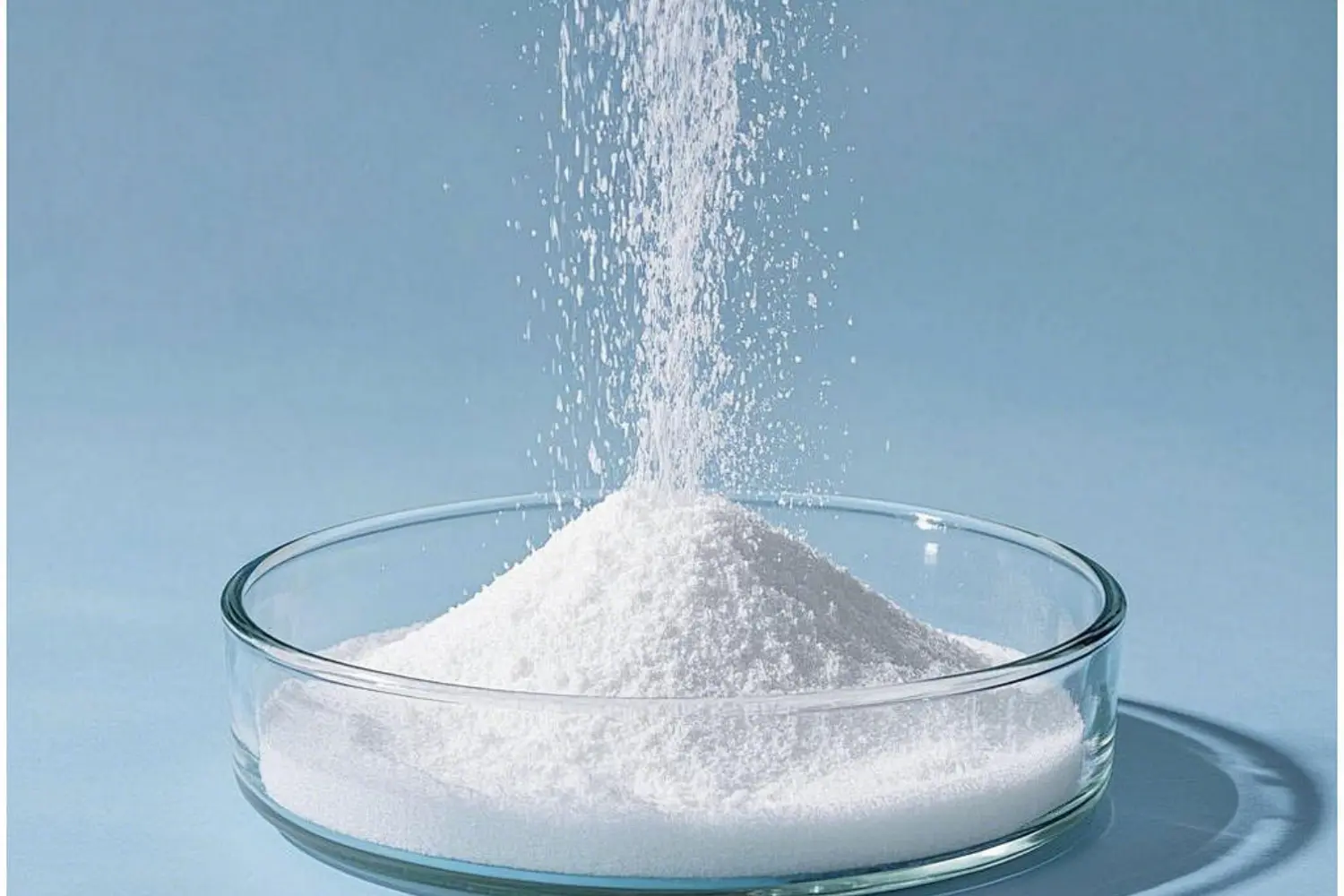
Due to its large specific surface area and high surface energy, nano-calcium carbonate is highly prone to agglomeration. Additionally, its hydrophilic and lipophobic surface characteristics result in poor dispersibility in organic media, making uniform dispersion difficult when directly used for filler modification of polymers. Therefore, surface modification of nano-calcium carbonate is a necessary prerequisite for its application in polymer composites.
The purpose of surface modification is to reduce the surface energy and polarity of nano-calcium carbonate, improving its interfacial compatibility with resins and organic polymer matrices. Based on the type of modifiers, it can be divided into the following two categories:
Organic surface modification is the most commonly used modification method. Stearic acid and its soaps are the most widely used modifiers. The carboxyl groups in their molecules can form chemical bonds with calcium ions on the surface of calcium carbonate, while the hydrophobic long carbon chains extend outward, transforming the surface of nano-calcium carbonate from hydrophilic to hydrophobic. In addition, phosphate coupling agents, titanate coupling agents, silane coupling agents, and others are also widely used for surface modification of nano-calcium carbonate.
Inorganic surface modification regulates the surface properties of nano-calcium carbonate by coating inorganic substances (such as silicon dioxide, aluminum oxide, barium sulfate, etc.) on its surface. Studies have shown that adding 10% barium sulfate as an inorganic surface modifier, combined with organic treatment using 4% stearic acid soap, 1% phosphate coupling agent, and 1% citrate, can produce nano-calcium carbonate products with excellent dispersion properties.
From the perspective of patent technology efficacy analysis, the technical effects of Chinese nano-calcium carbonate preparation patents mainly focus on improving stability, process simplicity, enhancing mechanical properties, good compatibility, low cost, and good dispersibility. This indicates that improving dispersibility and interfacial compatibility remain the core goals of current surface modification research.
4 Applications in Daily Products and Composite Materials
Nano-calcium carbonate plays an important role as a filler and functional additive in daily products and industrial composite materials.
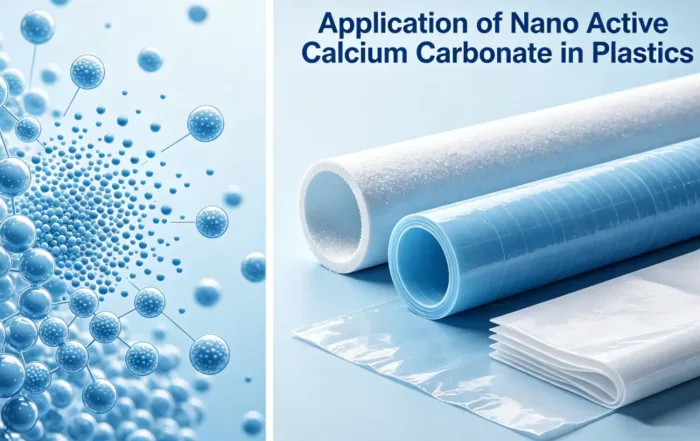
Plastic industry is the largest application market for nano-calcium carbonate. Nano-calcium carbonate can effectively eliminate voids and bubbles in plastics, allowing uniform shrinkage and improving mechanical properties and thermal stability. Surface-modified nano-calcium carbonate shows significantly improved compatibility with polyolefin matrices, with filler content reaching up to 40%, effectively enhancing dimensional stability, heat resistance, whiteness, transparency, rigidity, toughness, and tensile strength of plastic products. In the field of breathable film applications, Chinese invention patent CN202211565778.8 discloses a method for preparing specialized nano-calcium carbonate, using starch modification and in-situ esterification reactions to significantly enhance the dispersion of nano-calcium carbonate in polyolefin substrates.
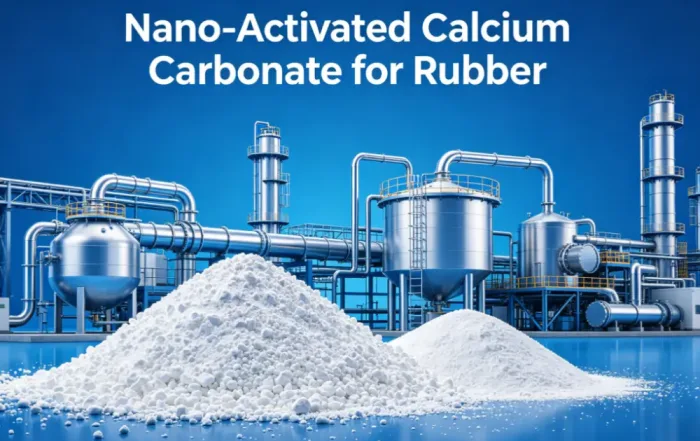
In the rubber and sealant field, nano-calcium carbonate serves as a reinforcing filler, capable of partially replacing carbon black or white carbon black, thereby reducing production costs. In automotive weld sealant applications, nano-calcium carbonate prepared through crystal seed preparation and ultrasound-assisted carbonation processes demonstrates excellent stability and dispersibility.
In the coatings and inks field, nano-calcium carbonate can improve hiding power, scrub resistance, and thixotropy of coatings. Highly dispersed transparent nano-calcium carbonate can be used in high-end products such as transparent inks, transparent rubber, and adhesives.
In the papermaking industry, nano-calcium carbonate serves as a filler and coating pigment, enhancing the whiteness, smoothness, and printability of paper.
5 Biomedical Applications
The application of nano-calcium carbonate in the biomedical field has been a research hotspot in recent years, with its advantages primarily derived from excellent biocompatibility, low toxicity, and unique pH-responsive degradation characteristics.
5.1 Drug Delivery Systems
Nano-calcium carbonate offers unique advantages as a drug carrier: it remains stable under physiological pH conditions (pH 7.4) while rapidly degrading under the acidic conditions of the tumor microenvironment (pH 4.5-6.5), enabling targeted drug release. This characteristic makes it an ideal carrier for anti-tumor drug delivery.
Based on carrier structure, calcium carbonate-based drug delivery systems can be classified into three categories:
Bare calcium carbonate micro/nanoparticles: directly serving as drug carriers, utilizing their porous structure and surface reactivity for drug loading
Core-shell structured microspheres: with calcium carbonate as the core and polymer coating on the outer layer, providing better protection for the drug-loaded core
Hollow polymer microcapsules: using calcium carbonate particles as templates, layer-by-layer assembly of polymers on their surface followed by removal of the calcium carbonate core to obtain hollow-structured polymer microcapsules capable of loading large amounts of drugs and achieving responsive release
Studies have shown that calcium carbonate-based carriers can be used to load various therapeutic agents including chemotherapeutic drugs, nucleic acids, proteins, and antigens. In tumor therapy, these carriers can enhance drug bioavailability, improve targeting to cancer cells, while reducing toxic side effects on normal tissues.
5.2 Tissue Engineering
Nano-calcium carbonate shows potential in bone tissue engineering. Calcium ions are important components of bone tissue mineralization, and degradation of nano-calcium carbonate can provide locally high concentrations of calcium ions, promoting the proliferation and differentiation of osteoblasts. Constructing porous scaffold materials by compounding nano-calcium carbonate with polymers can be used for bone defect repair.
5.3 Challenges and Prospects
Despite the great potential of nano-calcium carbonate in the biomedical field, its clinical translation still faces numerous challenges:
Colloidal stability: nano-calcium carbonate is prone to agglomeration in aqueous solutions; although surface modification strategies can improve stability, achieving long-term colloidal stability in vivo remains challenging
Large-scale preparation: establishing high-yield, highly reproducible synthesis processes is a prerequisite for industrial application
Long-term biosafety: the metabolic pathways and long-term toxic effects of nano-calcium carbonate in vivo require further in-depth investigation
Currently, research on calcium carbonate-based drug delivery systems is primarily focused on the in vitro level, with more systematic studies needed on their in vivo behavior. However, the great potential of these highly biocompatible carriers is undeniable.
6 Environmental Applications
Nano-calcium carbonate exhibits various application potentials in the field of environmental governance, mainly including the following aspects:
Wastewater treatment: nano-calcium carbonate possesses high specific surface area and surface activity, enabling effective adsorption of heavy metal ions in water (such as lead, cadmium, copper, etc.). Its adsorption mechanisms include surface complexation, ion exchange, and chemical precipitation.
CO₂ mineralization and fixation: using calcium sources from industrial solid waste to react with carbon dioxide for preparing nano-calcium carbonate not only achieves permanent CO₂ sequestration but also yields high-value products. The previously mentioned process for preparing nano-calcium carbonate from calcium carbide slag mineralization is a typical example of this application.
Water treatment and soil remediation: nano-calcium carbonate can serve as a neutralizing agent for acidic wastewater treatment and can also be used for remediation of heavy metal-contaminated soils.
Environmentally friendly material development: as a green filler, nano-calcium carbonate can partially replace petroleum-based fillers, reducing the environmental footprint of composite materials.
7 Artificial Intelligence Empowering Nano-Calcium Carbonate Research
With the development of the Materials Genome Initiative and the emergence of data-driven materials science research paradigms, the application of artificial intelligence (AI) technology in nanomaterials research is becoming increasingly widespread. The research group led by Professor Lu Meiqu at Guangxi Minzu University has innovatively proposed the introduction of artificial intelligence into nano-calcium carbonate research.
The potential applications of AI technology in nano-calcium carbonate research are mainly reflected in the following aspects:
Synthesis process optimization: by analyzing large amounts of experimental data using machine learning algorithms, establishing correlation models between reaction conditions and product particle size and morphology enables rapid prediction of optimal synthesis parameters, significantly shortening the research and development cycle.
Property prediction: based on the structural characteristics of nano-calcium carbonate, using deep learning models to predict its dispersibility in composite materials, reinforcement effects, and drug loading and release behaviors in biomedical applications.
High-throughput screening: combining computational chemistry and AI technology for high-throughput screening of modifiers and functionalization strategies suitable for specific application scenarios.
This interdisciplinary direction provides a new perspective for the intelligent and multifunctional development of nano-calcium carbonate.
8 Summary and Outlook
Nano-calcium carbonate, as an important inorganic nanofunctional material, exhibits broad application prospects in traditional industries, biomedicine, and environmental fields. This paper systematically reviews the preparation methods, surface modification technologies, and application progress of nano-calcium carbonate, with the main conclusions as follows:
(1) The carbonation method is the mainstream process for industrial production of nano-calcium carbonate, enabling controllable preparation of various morphologies through crystal form control and process optimization; the green synthesis route using calcium-containing industrial solid waste aligns with sustainable development principles and deserves further promotion.
(2) Surface modification is key to the application of nano-calcium carbonate in polymer composites; both organic modifiers (stearic acid, coupling agents, etc.) and inorganic coatings can effectively improve its dispersibility and interfacial compatibility.
(3) In the biomedical field, nano-calcium carbonate exhibits unique advantages in drug delivery, tumor therapy, and tissue engineering due to its excellent biocompatibility and pH-responsive degradation characteristics; however, colloidal stability, large-scale preparation, and long-term safety remain the main obstacles to clinical translation.
(4) In the environmental field, nano-calcium carbonate shows potential in heavy metal adsorption, CO₂ mineralization and fixation, and wastewater treatment.
(5) Introducing artificial intelligence technology into nano-calcium carbonate research can achieve synthesis process optimization and accurate property prediction, opening new pathways for the intelligent development of materials.
Future research on nano-calcium carbonate should focus on the following directions: developing green, low-cost, and scalable preparation processes; deepening understanding of the metabolic pathways and long-term safety of nano-calcium carbonate in vivo; constructing multifunctional nanocomposite systems; and exploring innovative models of AI-empowered material research. With continued research and technological breakthroughs, nano-calcium carbonate is expected to achieve high-value applications in even more fields.