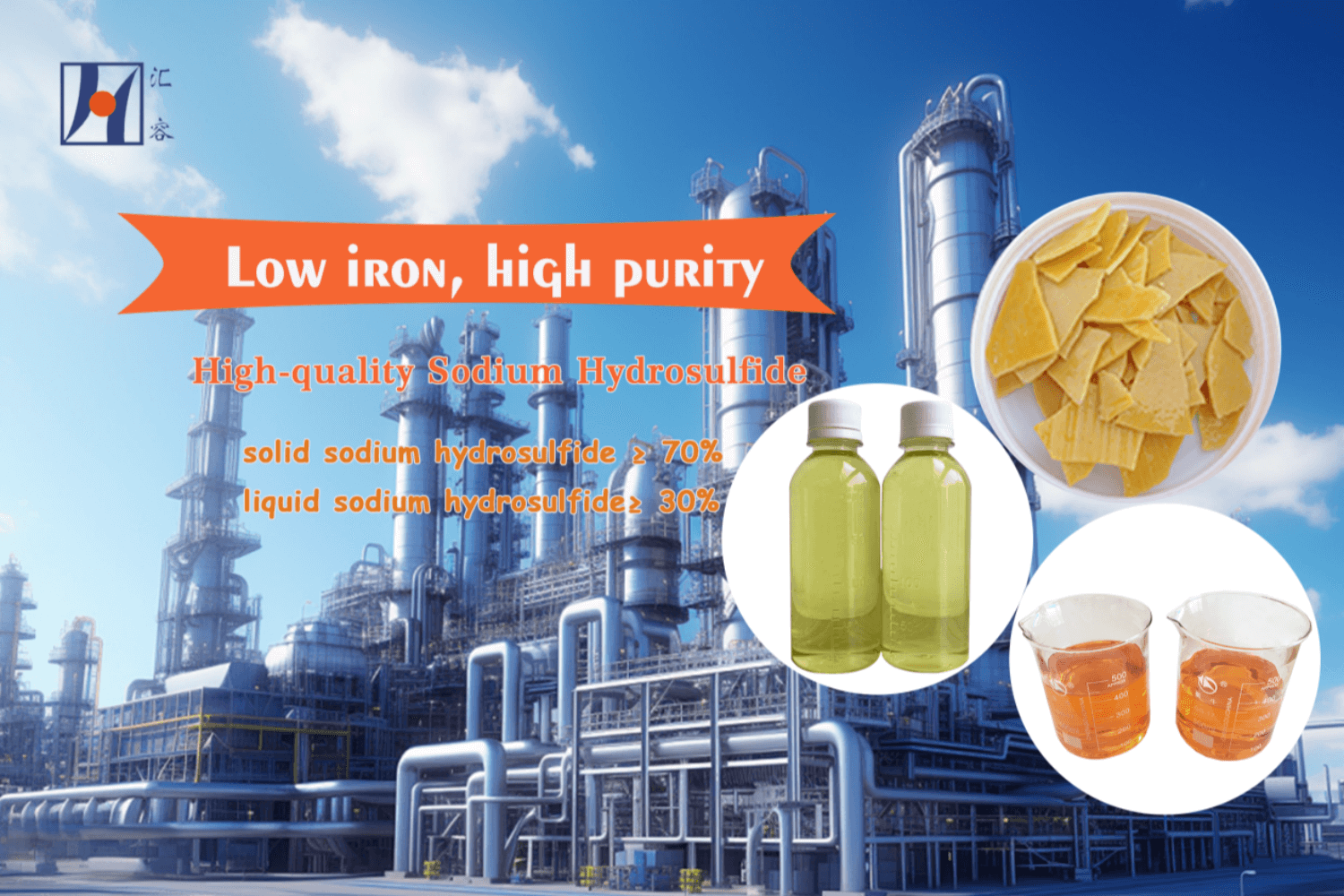
Sodium hydrosulfide (NaHS) is prone to deliquescence and often turns green during storage, which not only affects material quality but also poses safety risks. Deliquescence stems from its inherent tendency to absorb moisture from the air, while the color change is primarily caused by oxidation reactions producing polysulfides and the presence of heavy metal impurities. For materials that have already deteriorated, measures such as isolation, assessment, and safe disposal are necessary to avoid the generation of toxic hydrogen sulfide gas. To fundamentally solve the problem, warehouse management should be strengthened by improving packaging, controlling ambient humidity, and optimizing inventory to block the conditions leading to deliquescence and oxidation, ensuring stable and safe material storage.
I. Analysis of Causes for Deliquescence and Discoloration
1. Causes of Deliquescence
Reason: Sodium hydrosulfide itself is a highly deliquescent compound. Deliquescence refers to the process where a solid substance absorbs moisture from the air and gradually dissolves in the absorbed water, forming a saturated solution.
Mechanism: NaHS is an ionic compound with a strong attraction to water molecules. When the air humidity is high, it rapidly absorbs water molecules, forming a thin film of water on its surface. This water film gradually dissolves more NaHS, making the crystals moist and sticky, and may eventually turn completely into a solution.
2. Causes of Discoloration
Discoloration is the result of oxidation and chemical reactions, a process greatly accelerated by the moisture absorbed during deliquescence.
1. Primary Cause: Formation of Polysulfides
Reaction Process: Sodium hydrosulfide (NaHS), dissolved in the absorbed moisture, becomes very unstable and is easily oxidized by oxygen (O₂) in the air.
Step 1: NaHS is oxidized, producing sodium hydroxide and elemental sulfur.
`2NaHS + O₂ → 2NaOH + 2S`
Step 2: The generated sulfur (S) further reacts with unreacted sodium hydrosulfide (NaHS) in the system, forming sodium polysulfide.
NaHS + xS → Na₂Sₓ₊₁` (where x ≥ 1)
Key Point: Sodium polysulfide (Na₂Sₓ) refers to a series of compounds where polysulfide ions (Sₓ²⁻) of different chain lengths exhibit different colors, ranging from yellow to brownish-red. When these differently colored polysulfides mix and interact with potential trace impurities (such as iron ions), the macroscopic appearance manifests as green.
2. Secondary Cause: Heavy Metal Impurities
If the raw materials used to produce NaHS or the production equipment contain trace amounts of heavy metal ions like iron (Fe), nickel (Ni), or copper (Cu), these can also react with NaHS or H₂S to form colored sulfides (e.g., FeS is black, NiS is black/green; a mixture of various sulfides may appear dark or green), intensifying the color change.
II. How to Resolve the Issue
1. Primary Principle: Safety First!
Deteriorated sodium hydrosulfide is more prone to generating highly toxic hydrogen sulfide (H₂S) gas (smell of rotten eggs).
Assessment and Isolation:
Immediate Isolation: Move materials that have already deliquesced and turned green to an isolated area and mark them with a “Deteriorated, Hazardous” label.
Notify QC/Production Department: Immediately inform the relevant departments for inspection to assess whether this batch of material can still be used in production. Typically, severely discolored green material is not recommended for use in products requiring high quality, as it is no longer pure NaHS and can affect chemical reaction outcomes and final product quality.
2. Priority Use:
If the Quality Control department assesses that the material can be used for lower-grade applications, strictly follow the “First Priority Use” principle. Consume this batch of
substandard material in production as soon as possible to prevent further storage leading to greater loss or risk.
3. Handling and Disposal:
If deemed unusable, it must be treated as hazardous waste. Never discard randomly or flush down the drain! This can release large amounts of hydrogen sulfide gas, causing poisoning and environmental pollution. Contact a licensed hazardous waste disposal company for professional handling.
III. How to Prevent
1. Packaging Upgrade (Most Effective Method):
Preferred Method: Require suppliers to use double-layer packaging.
Inner Layer: Thickened polyethylene plastic bag, tightly sealed.
Outer Layer: Sealed woven bag or ton bag. Ideally, the inner bag should be vacuum-sealed or nitrogen-purged.
Current State Check: If currently using single-layer woven bags, deliquescence problems are almost unavoidable. Must provide feedback to the purchasing department to drive a change in packaging specifications.
2. Warehouse Environment Control:
Keep Dry: The warehouse must be well-ventilated and dry. Relative humidity is best controlled below 50%.
Use Dehumidifiers: In rainy seasons or humid areas, industrial dehumidifiers should be equipped in the warehouse; this is a very effective investment.
Prohibit Co-storage with Damp Items: Strictly prohibit mixing or storing near water, acids, or damp materials (e.g., cement, if moist).
Pallets: Goods must be placed on pallets, at least 10-15 cm off the ground, to prevent moisture ingress from the floor.
3. Inventory Management:
First-In, First-Out (FIFO): Strictly implement the FIFO principle. Sodium hydrosulfide is not a material suitable for long-term storage; inventory turnover should be rapid.
Reduce Inventory: Coordinate with production and procurement planning to minimize inventory levels and storage time. Avoid stockpiling several months’ supply at once.
Procurement Specifications: If usage is low, consider purchasing granular rather than powdered products. Granular products have a smaller contact area with air and are more stable.
4. Daily Operating Procedures:
Quick Retrieval and Sealing: When retrieving materials, work quickly. After retrieval, immediately reseal the inner and outer packaging. Do not leave containers open.
Damaged Packaging Handling: If packaging is found damaged, seal it immediately with wide tape or transfer the contents to a intact sealed container (e.g., a plastic drum with a lid).
Regular Inspections: Establish a regular inspection system. Check the status of sodium hydrosulfide inventory weekly, using a flashlight to look for signs of caking or discoloration inside the bags, enabling early detection and early action.