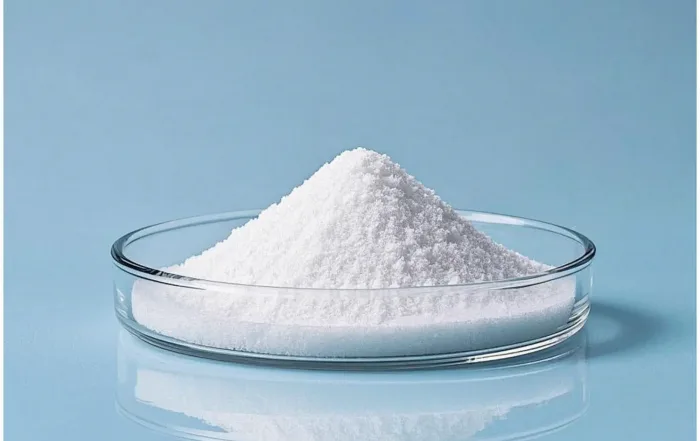
I. What is Sodium Hydrosulfide?
Sodium hydrosulfide (NaHS) is an inorganic compound with a molecular weight of 56.064. It’s a white crystalline powder with strong alkalinity, but industrial products are often grayish black, flake or lump shaped solids due to impurities like sodium sulfide. This compound has strong reducing properties. For example, when in contact with strong oxidizing agents such as nitric acid or chlorine, it readily undergoes redox reactions. When reacting with nitric acid, it’s oxidized to sodium sulfate, while the acid is reduced. It also reacts with acids to produce hydrogen sulfide gas. Take its reaction with hydrochloric acid as an example: NaHS + HCl = NaCl + H2S↑. This reaction can be used to prepare hydrogen sulfide gas, although in the laboratory, ferrous sulfide and hydrochloric acid are more commonly used for small scale hydrogen sulfide production.

II. Addition Methods of Sodium Hydrosulfide in Rubber Industry
Direct Addition: Add the powdered sodium hydrosulfide directly to the rubber bale and other compounding agents in the internal mixer or open mill, and mix. During mixing, the sodium hydrosulfide gradually disperses in the rubber and mixes uniformly with other components.
Solution Addition: Dissolve sodium hydrosulfide in a solvent (usually water) to make a solution of certain concentration. Then slowly add the solution to the rubber mixing equipment while stirring to ensure thorough mixing of the solution with the rubber. This method ensures better dispersion of sodium hydrosulfide in the rubber.
Addition After Mixing with Other Compounding Agents: Mix sodium hydrosulfide uniformly with other compounding agents such as accelerators and activators to form a mixed additive. Adding this additive to the rubber during mixing ensures more uniform dispersion of sodium hydrosulfide in the rubber and improves the synergistic effects among compounding agents.
III. Roles of Sodium Hydrosulfide in Rubber Production
Vulcanizing Agent: In the rubber vulcanization process, sodium hydrosulfide acts as a vulcanizing agent, reacting chemically with rubber molecules to form cross links. This transforms the linear rubber structure into a three dimensional network, significantly enhancing the physical and mechanical properties of the rubber such as strength, elasticity, and wear resistance, and improving its thermal, oil, and corrosion resistance.
Vulcanization Accelerator: Sodium hydrosulfide can speed up the vulcanization process, shorten the vulcanization time, and boost production efficiency. It reacts with the double bonds in rubber to form vulcanization cross links, accelerating the cross linking and curing of the rubber.
Rubber Property Improvement: Sodium hydrosulfide can enhance the processability of rubber, reduce mixing temperature and energy consumption, and make rubber easier to process and shape. It also improves the bonding between rubber and fillers like fibers, thereby enhancing the overall performance of rubber products. For instance, in some specialty rubbers, the addition of sodium hydrosulfide can improve oil and high temperature resistance, ensuring good performance in harsh environments.

IV. Formulation Adjustments for Different Rubber Vulcanization Processes
The addition amount of sodium hydrosulfide in rubber vulcanization should be accurately controlled based on factors such as the type of rubber, the vulcanization system, and the desired properties of the rubber product. Here are some common control methods and considerations:
Formulation Adjustments Based on Rubber Type and Formulation
Natural Rubber: When used as a vulcanizing agent in natural rubber, the typical addition level of sodium hydrosulfide is 1 3 parts per 100 parts of rubber by mass. For example, in a high performance natural rubber compound preparation method, 1 part of sodium hydrosulfide is used in combination with 1.5 2 parts of accelerator NOBS and 0.5 1.5 parts of accelerator TBzTD. This produces vulcanized rubber with advantages such as high strength, high wear resistance, low heat generation, and high anti wet skid performance.
Nitrile Rubber: For nitrile rubber, the addition level of sodium hydrosulfide is usually between 0.5 1.5 parts. In a certain nitrile rubber formulation, 0.8 parts of sodium hydrosulfide is added as a vulcanizing agent to give the vulcanized rubber good oil resistance and mechanical properties.
Hydrogenated Nitrile Rubber: In the vulcanization system of hydrogenated nitrile rubber, the usage amount of sodium hydrosulfide is generally 1 3 parts. For example, in a hydrogenated nitrile rubber composition using a sodium hydrosulfide vulcanization system, the sodium hydrosulfide dosage is around 1.5 parts. This composition has low compression set and high heat resistance, making it suitable for manufacturing various oil resistant seals.
V. Precautions for Adding Sodium Hydrosulfide
Accurate Weighing: When adding sodium hydrosulfide, use high precision weighing equipment to ensure accurate dosing and avoid unstable vulcanization effects due to weighing errors.
Uniform Dispersion: The dispersion of sodium hydrosulfide in rubber significantly impacts the vulcanization effect. During mixing, ensure thorough stirring and dispersion to prevent local over or under vulcanization.
Stability Consideration: Sodium hydrosulfide can deteriorate and absorb moisture during storage and use. It’s advisable to dry it before use and accurately determine its effective content to calculate the addition amount accordingly.
VI. Methods for Uniform Distribution of Sodium Hydrosulfide
Two Stage Mixing Method: First, prepare a master batch without the vulcanization system, then add sodium hydrosulfide and other vulcanization components in the second mixing stage. This allows sufficient time for sodium hydrosulfide to disperse uniformly in the rubber.
Combination of High and Low Temperature Mixing: Initially mix at high temperature to soften the rubber and compounding agents for easier mixing, then further mix at a lower temperature to ensure uniform dispersion of the compounding agents. Low temperature mixing also prevents premature reaction or decomposition of sodium hydrosulfide and other compounding agents.
Use of a Cooling System in Internal Mixers: During mixing, use an internal mixer with a cooling system to control the mixing temperature. This prevents excessive temperature rise, which can lower the rubber compound viscosity, reduce shear force, and affect the dispersion of sodium hydrosulfide.
Master Batch Preparation: Pre mix sodium hydrosulfide with other compounding agents to form a master batch, which can be more uniformly dispersed in the rubber during subsequent mixing.
Use of Dispersants: Adding appropriate dispersants can enhance the dispersion of sodium hydrosulfide in rubber, shorten mixing time, and reduce energy consumption.
Mixing Time Control: Ensure sufficient mixing time for thorough dispersion of sodium hydrosulfide in the rubber. However, avoid over mixing to prevent premature vulcanization or rubber compound degradation.
Stirring Speed and Method Control: During mixing, properly control the stirring speed and method to ensure uniform distribution of sodium hydrosulfide in the rubber. For example, in an internal mixer, adjust the rotor speed and type to optimize the stirring effect.